First suspect on a cold Viking gas oven: the igniter. On electric and dual-fuel models, it’s the bake element. After that come the temperature sensor and a control setting such as a stuck self-clean lock. You can rule out the settings in ten minutes. The parts need a meter check.
Key facts
- On most Viking gas ovens, the igniter must glow hot enough to open the gas valve. One that glows but runs weak is the top cause of a gas oven that stays cold.
- On electric and dual-fuel Viking ovens, a bake element with a visible blister or break will not heat at all.
- An oven that heats but runs 25°F or more off usually points to the sensor, thermostat or calibration, not the heat source.
- A Viking gas oven still needs 120V power for the igniter, so a tripped breaker stops it from heating.
- If you smell gas, stop, leave the oven off and call your gas utility from outside.
Oven dead or barely warm? Rule these out first
No panels come off for these:
- Power. Check the breaker or GFCI that feeds the range. Gas models need it for the igniter and controls. Electric and dual-fuel models need a 240V circuit, and half of a double breaker can trip on its own.
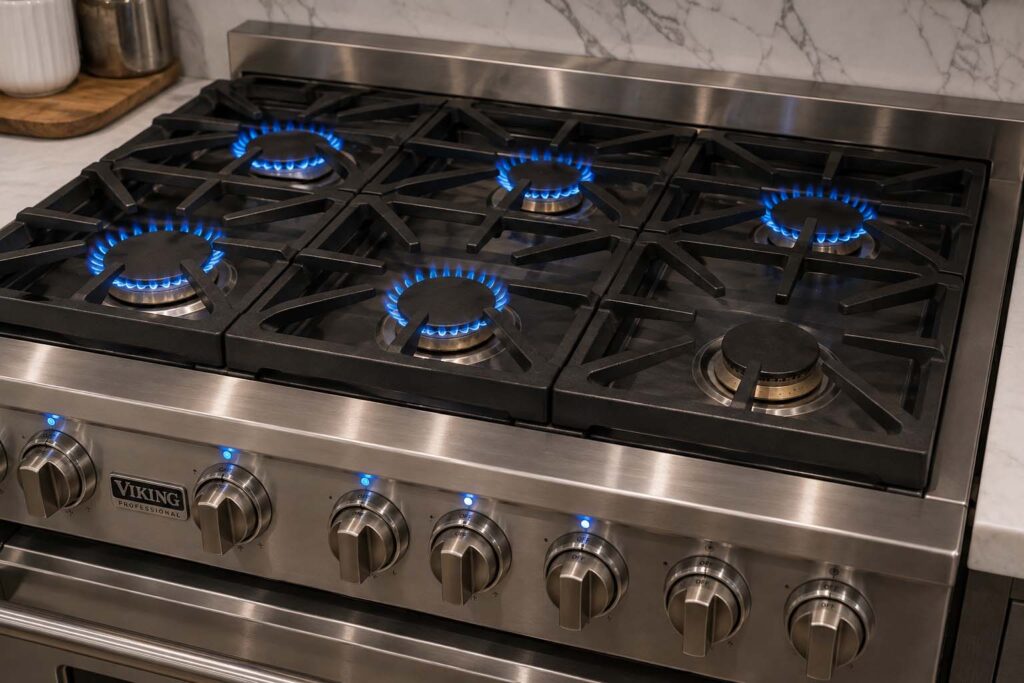
- Gas supply. If the cooktop burners light, gas is reaching the range. If nothing lights, make sure the shutoff valve behind the range is open (the handle runs in line with the pipe).
- Self-clean lock. If the door lock light is on after a clean cycle, the oven will not start a bake. Let it cool fully, then turn the controls off and on.
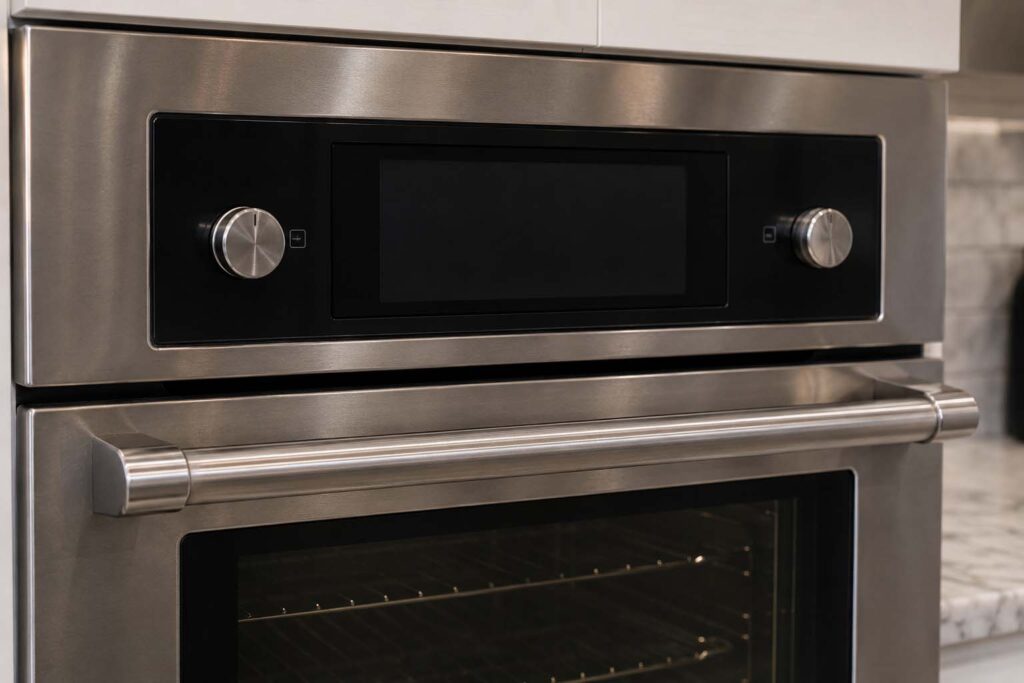
- Settings. On models with electronic controls, check that Sabbath mode, a delay timer or control lockout is not active. Your use-and-care manual lists the key presses for each.
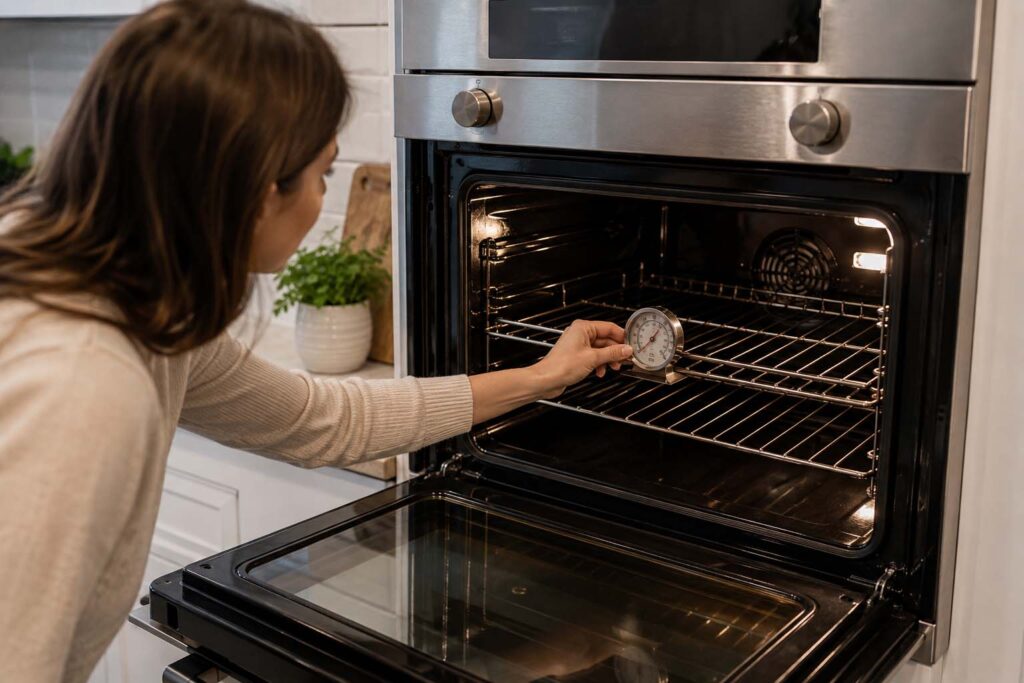
- Thermometer test. Set 350°F, wait 20 minutes and read an oven thermometer on the center rack. This tells you whether the oven is not heating at all or heating short.
Glowing igniter, cold element, drifting temperature: first suspect for each
| What you see | Likely cause | DIY or technician |
|---|---|---|
| Gas oven: igniter glows orange, still no flame after a couple of minutes | Weak igniter not drawing enough current to open the valve | Technician (amp test and replacement) |
| Gas oven: no glow at all | Failed igniter, no power, or a control or thermostat fault | Check the breaker, then technician |
| Electric oven: no heat on bake, broil works | Bake element open or a loose terminal | Technician |
| Heats, but runs 25–50°F low | Temperature sensor, thermostat or calibration offset | Calibration is DIY on some models; sensor tests need a technician |
| Heats slowly, convection fan silent | Convection fan motor or convection element | Technician |
| Nothing works after self-clean | Door lock stuck or a thermal fuse opened | Technician |
Gas oven glows but never lights
Most Viking gas ovens use a hot-surface igniter wired in series with a safety valve. The valve only opens once the igniter pulls enough current, so an aging igniter can glow brightly and still never let gas through. You may hear a click or see a long delay, then the oven gives up. Our guide to Viking oven igniter replacement explains how a technician confirms this with an amp reading before swapping the part. If the oven will not respond at all, see Viking oven won’t turn on.
Electric or dual-fuel oven stays cold or drifts
A bake element usually fails with a visible split or bubble, but some break inside the sheath with no outward sign. A technician checks resistance at the terminals with the power off. When the oven heats but drifts, the temperature sensor is the next suspect. It changes resistance as the cavity warms, and the control reads that change. If the reading is off, the oven stops heating too early. Our article on fixing a Viking oven temperature sensor covers the test.
Suspect part still in play after the checks
Book a visit if the igniter glows without lighting, an element or sensor needs a meter check, or the oven quit during or after self-clean. That work sits behind live panels or on gas connections. Each suspect gets a meter check before anything is swapped. The price comes in writing first. For a sense of what the work involves, read what Viking oven repair costs, or see our Viking oven repair and Viking range repair services.
FAQ
Why does my Viking oven heat up but not reach temperature?
Most often, a weak igniter on gas models or a failing temperature sensor on electric ones. Check with an oven thermometer first. If the oven runs a steady 10–25°F off, a calibration adjustment in the settings may fix it.
How long should a Viking gas oven take to light?
The igniter normally glows for a short while before the flame appears, often about a minute. If it keeps glowing well past that with no flame, the igniter is probably too weak to open the valve.
Can I replace a Viking oven igniter myself?
It means working near the gas valve and burner, so we recommend a technician. They can also confirm the igniter is the cause before buying a part.
Is it safe to use the oven while it is heating poorly?
If it is a gas oven and you notice any gas smell, no. Turn it off and call your gas utility. If there is no smell, it is generally safe, but food will cook unevenly until the fault is fixed.
Oven still cold? Request a visit online.
Viking® is a registered trademark of Viking Range, LLC. Viking Appliance Repair Pros is an independent repair company and is not affiliated with Viking Range, LLC.