


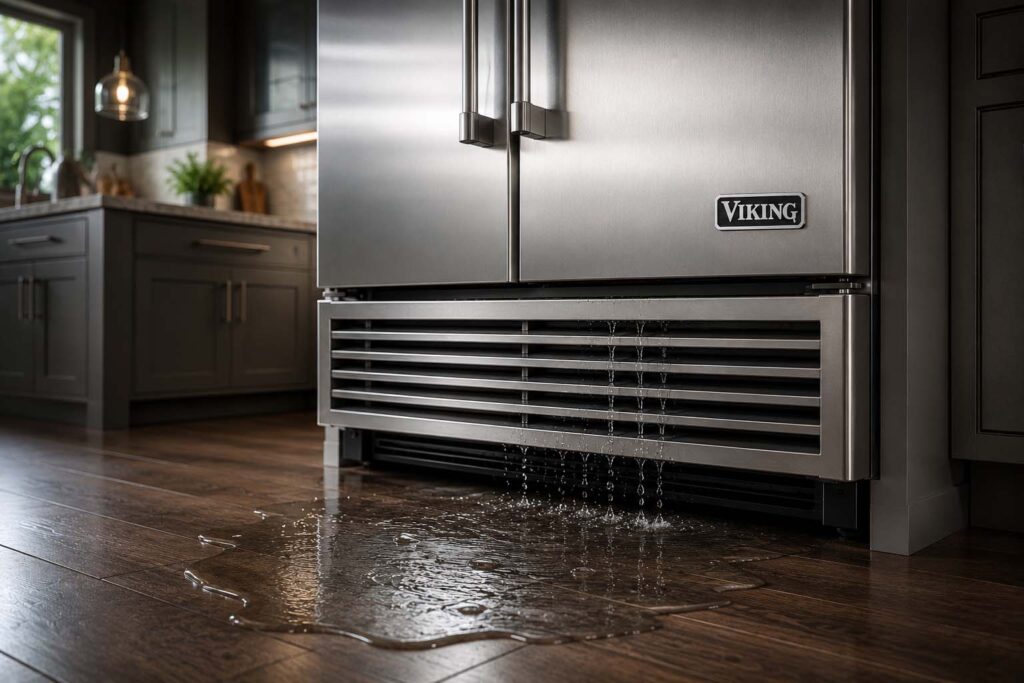
A refrigerator leaking water almost always traces to one of four sources: a clogged defrost drain, a cracked or overflowing drain pan, a failing water inlet valve, or the ice maker’s supply line. Where the water shows up — inside the fresh-food section, under the unit, or at the back wall — tells you which one you’re dealing with.
Water is the one refrigerator fault that damages more than the refrigerator. On a built-in Viking sitting flush inside cabinetry, a slow leak can soak the toe kick and the flooring under it before anyone notices. This guide maps each leak location to its cause, covers the checks you can do yourself, and flags the repairs that need a technician. Viking Appliance Repair Pros services Viking refrigeration in Seattle, San Jose, and Denver; if water is showing up daily, book a repair visit before the floor pays for it.
Find the leak by where the water appears
Location is the fastest diagnostic you have. Match the puddle to the row below before pulling anything apart.
| Where the water is | Most likely cause | Owner-fixable? |
| Inside, under the crisper drawers | Clogged defrost drain | Sometimes — see below |
| On the floor, front of unit | Overflowing or cracked drain pan; defrost drain backing up | Inspection yes, replacement no |
| At the back wall, near the supply line | Water inlet valve or fitting on the line | No — shut off the water, then call |
| Around the ice maker or dispenser | Frozen or split fill tube, filter housing O-ring | Filter reseat yes, tube work no |
| Condensation on interior walls | Worn door gasket or door left ajar | Yes — clean/inspect the gasket |
One pattern worth knowing: a leak that appears every few hours in a rhythm usually follows the defrost cycle, which points at the drain. A constant seep points at the water line side instead.
The defrost drain: the most common cause
Every frost-free Viking runs scheduled defrost cycles. Meltwater from the evaporator runs down a drain channel into a pan near the compressor, where it evaporates. When that drain clogs with food debris or freezes solid, each defrost cycle sends water somewhere it shouldn’t go — first pooling under the crispers, then finding the floor.
The tell is timing: water inside the compartment that returns every day or two, wiped up only to reappear, is defrost water. On many models you can clear an accessible drain opening with warm water once the compartment is emptied. On Viking built-ins, the drain path runs behind interior panels, and clearing a frozen drain properly means removing them — a one-visit job for a technician, and worth doing right, because a drain that refreezes will put the same water back on your floor next week.
The water line side: valve, filter, and fill tube
Everything that feeds the ice maker and dispenser is pressurized, which is why faults here leak constantly rather than in cycles. The water inlet valve at the back of the unit meters water in; when its body cracks or its seal wears, it drips whether or not ice is being made. A misseated water filter or a worn O-ring on the filter housing leaks inside the compartment, usually near the filter itself. And a fill tube that froze and split sprays or drips each time the ice maker calls for water.
Two of these have a first response you can do: reseat the filter (remove it, check the O-rings, click it firmly back), and shut off the refrigerator’s water supply at the wall if you see active dripping at the back. Valve and fill-tube replacement sit on the pressurized line and belong to a technician.
If your ice maker has also stopped producing, the same components are suspects — our guide to a Viking ice maker that’s stopped working walks through that side of the system.
Door gaskets and leveling: the quiet causes
Not all water arrives through a failure. A refrigerator tipped slightly forward drains poorly and can spill its own defrost water; the fix is adjusting the leveling legs so the unit sits level or tips a touch back. A worn or dirty door gasket lets humid kitchen air in, and that moisture condenses on cold interior walls until it pools under the drawers — mimicking a drain clog.
Check the gasket with a visual sweep for tears and a paper test: close the door on a strip of paper and pull. Weak grip at any point means the seal isn’t holding there. Clean gaskets recover; torn ones get replaced. On a Viking, gasket replacement is a same-visit repair and far cheaper than the compressor wear that a leaking seal causes over time, since the unit runs longer cycles to hold temperature.
When to call, and what it runs
Call when the leak is on the pressurized side (valve, fill tube, filter housing that won’t seal), when defrost water keeps returning after the drain has been cleared, or when any leak pairs with warm temperatures or a noisy compressor — that combination suggests the fault is bigger than the puddle.
Drain clearing, gasket replacement, and valve replacement all sit in the routine, single-visit tier of refrigerator work. Fault-by-fault ranges are in our Viking refrigerator repair cost guide. The comparison that matters: every one of these repairs costs less than replacing water-damaged hardwood under a built-in unit.
Frequently asked questions
Why is my refrigerator leaking water inside?
Water inside the compartment, usually under the crisper drawers, is defrost water that can’t reach its drain — the drain channel is clogged with debris or frozen over. Condensation from a worn door gasket is the other inside source. Both put water in the same place, so check the gasket before assuming a clog.
Why is my refrigerator leaking water on the floor?
Floor water comes from a defrost drain backing up and overflowing its pan, a cracked drain pan, or a pressurized leak at the inlet valve or supply fitting behind the unit. A cyclical puddle points to the drain; a constant one points to the water line. Shut off the supply valve if the leak is active.
Can I fix a leaking refrigerator myself?
You can handle the perimeter: reseat the water filter, clean and test the door gaskets, level the unit, and clear an accessible defrost drain with warm water. Leave pressurized-line work — inlet valve, fill tube, supply fittings — and anything behind interior panels to a technician, especially on a built-in Viking.
Is a leaking refrigerator an emergency?
It’s urgent, not instant-emergency — with one exception. Shut off the water supply and book promptly for any active drip at the back, because pressurized leaks don’t stop on their own. A slow interior leak can wait days, not weeks; standing water under a built-in reaches flooring and cabinetry fast.
Stop the water, then fix the cause
Find the puddle’s source with the location table, do the owner-level checks, and shut off the supply line if the leak is live. Then have the actual cause corrected — drain, valve, or gasket — before the water bill comes due in flooring. Request a quote or schedule Viking refrigerator service in Seattle, San Jose, or Denver, and a technician can trace and fix most leaks in a single visit.